Category: Online Brand

Start today and build a brand online that reflects your ambition. These essays are a playful introduction to brand building theory and practice. Follow along to discover how your online brand can stand out from the crowd and make an impact.

  • You Don’t Need to Be Social Media Famous to Sell

    You Don’t Need to Be Social Media Famous to Sell

    Your post is brilliant—packed with sound advice and a really entertaining read.

    But the same few suspects give you a like or a comment. One new follower. What the heck. You’re ready to give up.

    When you’re starting to build your brand on social media, it’s easy to think that all you have to do is get lots of followers and subscribers, and once you’re social media famous, sales will drop into your lap.

    And then you realize it’s not that easy to get followers and subscribers, and you want to throw in the towel.

    Not so fast. Let’s think through what you want to achieve.

    For many small businesses and independent professionals, sales come from different channels.

    Some sales might come from people who live in your community and find you through a local Facebook group.

    Others might come from a Google review left by a customer.

    You don’t need to be the most popular person on your platforms of choice.

    Instead, you need to create content that appeals to your audience.

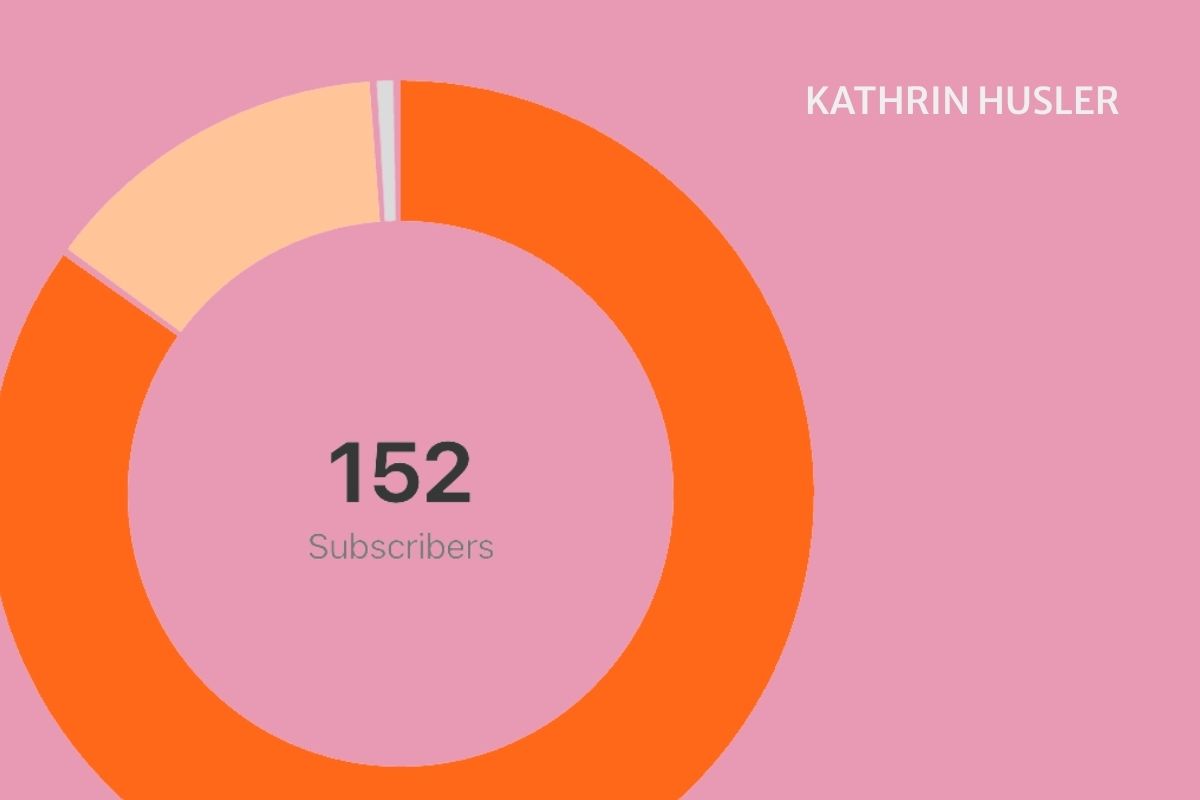
    They might go to your profile, but even though they like it, you only have 152 subscribers and they are not quite convinced that it’s a sound decision to buy from you.

    orange circle indicating 152 subscribers on branded pink background

    They look you up on LinkedIn, and they see that you worked for a company they know, and that one of your customers gave you a glowing review.

    They’re starting to feel confident.

    They click on the link to your website. Your website looks professional and lists all your services with pricing. Your potential customer realizes there’s a product that’s an even better match with what they are looking for.

    They add it to the cart and buy it. Or they email you about a consulting session.

    This is one hypothetical scenario. It could play out very differently, but it illustrates how a professional online presence helps you to build trust with your potential customers—a crucial ingredient in making sales.

    This doesn’t mean you have to spread yourself thin and spend all your time building an impressive presence on every platform.

    Pick the platforms that make the most sense for your business and create messaging and content that appeals to your audience.

    Building a website takes time, but it’s not rocket science anymore. There are a million YouTube tutorials you can follow.

    So next time your post flops or you lose a few subscribers, don’t panic.

    Building a business online is a long-term game, and with the right strategy, you can succeed whether or not you have 7,000 followers.

  • The Algorithm Is Out to Get You

    The Algorithm Is Out to Get You

    The other day I was burnt out. Social media results were stagnant, and I was stressed and dispirited.

    I knew I wasn’t doing the work that was crucial at this stage in my online brand building process.

    So I did what we do nowadays, and complained to my friend ChatGPT. And you know what? For once it was a great idea.

    ChatGPT broke down everything I was and wasn’t doing, and I could see that I had too much on my plate.

    After some back and forth, it was soon clear that I had to deprioritize some social platforms if I wanted to reach my brand building goals for Christmas.

    What happened? How did Miss Brand Strategy get so distracted?

    White mask on branded blue background

    The answer is social media algorithms and their manipulative programming.

    On a couple of platforms, I noticed that when I posted more, I got the views I wanted. Two extra posts gave me more views on all my posts.

    I was chasing the highs of impressions, likes, comments—most of it vanity metrics that barely had an impact on my bigger goals.

    But they felt good. They gave that insecure part of me who needed outside validation assurance that I was doing the right thing.

    After the chat with my bot, I realized that I didn’t need this validation.

    I know that I’m doing the right thing. It has nothing to do with other people or algorithms’ approval; it has everything to do with listening to myself and doing what’s right for me.

    So what do we do? How do we fight the addictive nature of outside validation that social algorithms sporadically bestow upon us?

    The simple answer is: post what you want to post and don’t pay the feedback any mind.

    The more nuanced answer is: post what you planned to post, don’t worry too much about how individual posts do, but evaluate once in a while what works better or if you need to switch up your content or formats to make them more interesting.

    Instead, our online presence serves to build trust with our target audience and clearly shows them why our business is the right choice.

    If you’re feeling burnt out with content creation, do less. But for the content you do create, think about how it resonates with your target audience.

    The algorithms push us to do what they want. Our brand and business strategies remind us of the work that needs to get done to build a successful business.

  • Do You Have an Online Brand Strategy?

    Do You Have an Online Brand Strategy?

    A lot of advice on how to start a business is very practical. Put a product out there and see how people respond. Talk to potential customers. See what content resonates.

    As a former sales rep, I like this practical approach. It’s a great way to do customer and market research. You want to feel the pulse of the market.

    But as a brand consultant, I want you to do more. If you’re building a brand online, I urge you to create a strategy document for your brand.

    You don’t want your strategy to be dictated by outside forces only, such as customer needs, demand, and algorithms.

    These forces will change, and you don’t want to be a ship out on the water that depends on the currents only, without a motor or a sail to get where you want to go.

    Instead, I want you to think about what you want to achieve, do some customer and competitor research, and then develop a unique brand strategy.

    A brand strategy document is not set in stone. Develop products and services, and learn what resonates. Talk to customers. Amend your document as needed, but let it be your guiding light.

    Red lighthouse on branded blue and pink background

    So how do you put together a brand strategy document?

    I’m doing this right now. And believe me, being my own boss, I tried to get out of it too.

    These are some of the major components that your brand strategy document should contain.

    The first section is about your customers and what they need:

    • Who are your customers? I encourage you to do some research on this. I’m sure you already have an idea, but see what you can find online and at the library.
    • Can you define your customers in terms of demographics and attitudes?
    • Do you have any questions about your customers? Can you ask customers or potential customers some questions? Can you do a quick survey on social media?
    • Who are your competitors? What do you know off the top of your head? What can you find out with some research?
    • What do your customers want that you and your competitors aren’t currently providing?

    The next section is about your business:

    • What makes you different from the competition? List the qualities in detail. Consult your customer research and ensure that your points of differentiation are something your audience cares about.
    • What are the benefits of choosing your brand? Don’t just think practical benefits. What are the emotional benefits?
    • What is your brand’s worldview? Your brand worldview has to appeal to your target customer. List your brand’s values.
    • How are you expressing this worldview as a brand? Think about customer experience and how you operate as a brand within the community. What is your brand voice and look, and how does it fit into your brand worldview?

    If you answer these questions, you’re a step ahead of most people who are building a brand online.

    You don’t need a marketing degree to position your business well. I’m working on putting a framework together that makes it super simple to build a professional and impactful brand online.

  • Marketing is not Advertising

    Marketing is not Advertising

    If you are building a business, I urge you to put marketing at the heart of your business. With marketing, I don’t mean advertising. I mean your vision, your products and services, and your customers.

    I will tell you what happens if marketing is underfunded and ignored. I will also tell you what it means to put marketing at the heart of your business and why it allows your business to thrive.

    I used to work as a sales rep for a company where marketing was seen as this slightly frivolous department that didn’t bring enough leads. Marketing staff were often laid off as a cost-saving measure during downturns.

    I was in charge of the sales strategy for Canada without any guidance beyond revenue goals. Leadership visited customers with me sometimes and hogged the conversations, bragging about their recent promotion and the details of their latest skiing trip.

    I tried to be marketing, sales and customer support all in one, and I was failing everywhere.

    While there was a vision statement on the company website, sales leadership had a separate strategy that was in direct conflict with this vision. Selling became a race to the bottom: pressure tactics, discounts, random pricing, spamming customers with offers to hit the quarterly goals.

    If you’re building a business, I urge you to put marketing at the heart of it. Develop a vision for your business that touches everything you do and that everyone working for you understands and takes to heart.

    Small poodle with big eyes and a fashionable pink handkerchief around the neck on branded pink background

    Let’s say you’re selling dog biscuits. Your vision might be for dogs to live happier and healthier lives. This vision will inform everything you do:

    • How you make your biscuits
    • What you research
    • What you say on your website
    • What kind of ads you create
    • What customers you attract
    • Where you sell your products

    Your sales rep will never have to say “buy these biscuits because they’re on sale”. Instead, the rep will have information on how the biscuits help the dog’s teeth and digestion, and how the right diet improves the dog’s quality of life and life expectancy.

    Your dog customers will thrive. Your human customers will promote your products by word of mouth and inquire at their pet store why it doesn’t carry their dog’s favourite treat yet.

    Your excellent social media strategy and your two sales superstars are not responsible for your exponential growth. You’re growing because everything you do makes your customers happy and satisfied.

    Put marketing at the heart of your business, and everything you do will be unified and guided.

  • How Do You Build a Relationship with People Who Don’t Pay Attention?

    How Do You Build a Relationship with People Who Don’t Pay Attention?

    More than 20 years ago, my mom was biking home from a triathlon meeting just after 10 pm. It was rainy and dark. She was on the main street, and a delivery driver coming from a side street didn’t see her.

    The accident was in the local newspaper the next day. My mom’s brain injuries were severe and the doctors had to put her into an artificially induced coma and remove part of her skull due to brain swelling.

    Four weeks later, she had infections in her lungs and needed to be woken up from the coma. I remember being excited when I held her hand and she moved her arm for the first time. A sign of life.

    She had a stroke and passed away that night. My father, my sister, my brother, and I were devastated.

    I was home on vacation from my studies overseas. After my mom’s death, we were all back together in our childhood home, and one morning, my dad was so distraught that he shaved off half his beard by accident. On one side, he had his regular bushy brown beard, and on the other side, smooth pale baby skin.

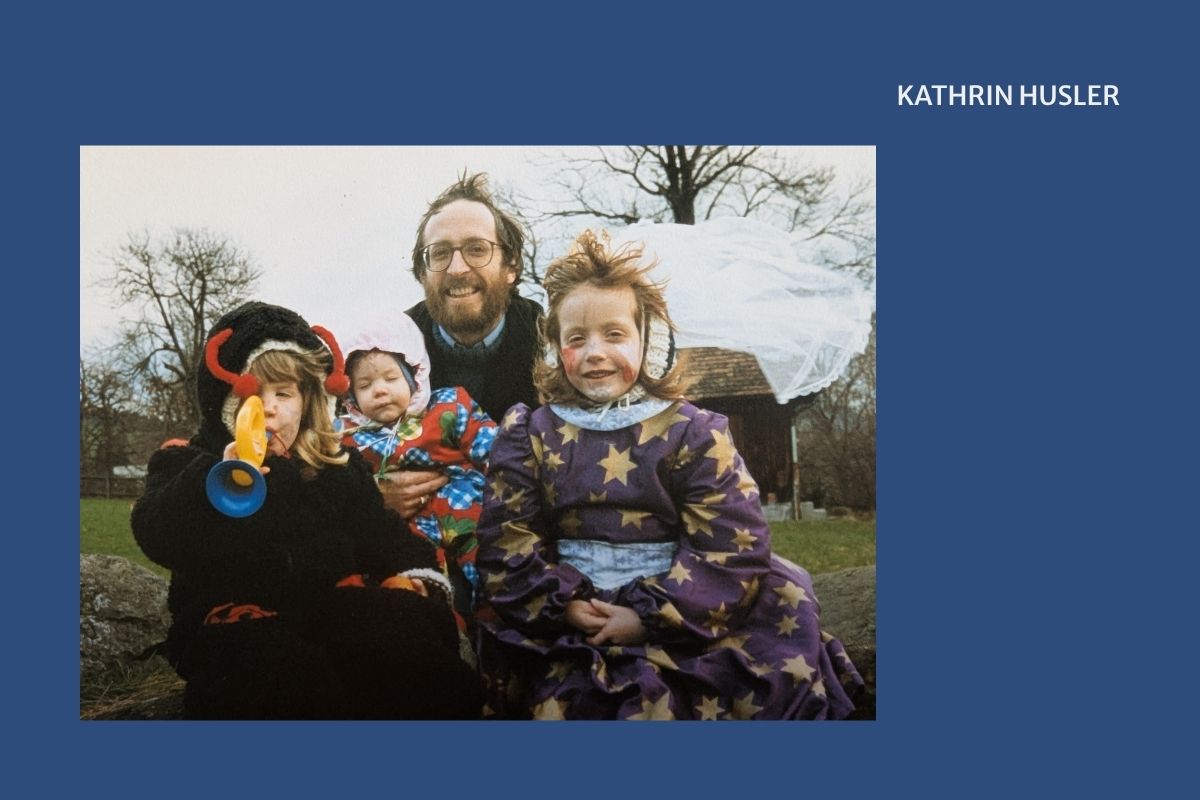
    Author dressed up as a princess for carnival together with her two younger siblings and her dad

    All my life, my father had been a beardy guy. And he felt comfortable that way.

    “I guess you have to shave the other side off too,” I said.

    “Oh no,” he said. “Nothing to worry about. People don’t pay attention.”

    I shook my head, and he went to work in the village where everybody had known him for years. And guess what?

    Nobody noticed.

    Why didn’t people notice that my dad was missing half of his beard? They knew my dad. They saw him regularly in the village. There was no reason for them to look closely at him. And anyway, with my mom’s accident and passing, there were other things to worry and talk about.

    What does this have to do with brand building? The other day, someone asked the Substack community to share the best tip they’ve received from a creator. I’ve received amazing advice on social media, so I wanted to write a response.

    I was thinking of different creators and their niches, and of the pictures that come up with different posts in my feed. But I couldn’t think of one exceptional piece of advice that helped me. I had consumed a ton of expertise online; I just couldn’t remember the specifics.

    Most of us want to help our audience, and we put smart knowledge out there.

    But all I remembered was names and faces and feelings.

    The good news is that I am an average human being. The reason I remember names and faces and associate feelings with these online connections is because of the consistent value they provide. And I mean value in a bigger sense.

    People don’t pay attention to that missing half of a beard. They pay attention to how you make them feel.

    When you’re building a brand online, don’t worry about getting a few details wrong. Stay consistent, be visual, be a human being, and help your target audience. And your audience will build a relationship with you without even paying attention.

  • The Renaissance of Good Writing

    The Renaissance of Good Writing

    As marketers or writers, nothing infuriates us more than having someone (usually a bad writer) take our work and run it through AI, thinking that version is going to be better.

    I love generative AI. It proofreads my work. It helps me brainstorm ideas. It makes connections I didn’t think of. It even writes cover letters for me when archaic organizations still require them.

    But I don’t want it to water down my unique perspective when I write for an online audience. AI is like a democratically elected government—it reflects the consensus but nobody is happy with it.

    AI is not allowed to write my blogs and social posts. I could take out all the AI tells that people love to complain about (the lists of threes, actually, em dashes…), but it wouldn’t make a difference.

    What does that mean, writing is thinking? It means that if you sit with the words and rearrange them and use that lovely friend the dictionary, you’re increasingly gaining clarity about what you want to say.

    You’re providing value to your readers by sharing original thoughts, but you’re also providing value to yourself by doing the hard work of improving your ideas and building a point of view that’s uniquely yours.

    When you build a brand online, you want it to communicate something that’s uniquely yours. You want to be an authority, likely in a space that’s already crowded with competitors. When you use your own thoughts and your own voice, you build authenticity without trying.

    Two dark pink Cosmos flowers in front of a branded blue background

    AI was supposed to replace marketers and copywriters, and many of us indeed lost our jobs. But instead it is becoming clear that many people misunderstood the roles of marketers and copywriters.

    They saw us as people who put words on a page, created campaigns and videos. How easy. Let’s automate that with AI.

    In an age of automation, our uniquely formulated perspectives are the gold that people dig for with their scrolling.

    The AI threat that was supposed to replace marketers and writers is instead turning into an opportunity for us. People who create original work will increasingly thrive thanks to the authentic value we create for human audiences. Even our silly spelling mistakes have become endearing.

    Congratulations. Being a human being has just become next level.

  • You Don’t Need to Be a Sales Superstar

    You Don’t Need to Be a Sales Superstar

    Anyone can be successful at sales. If you have a business or want to start a business, you have to know how to sell. I’m telling you it’s not rocket science.

    I’ve worked in sales for more than 12 years, and I’ve sold everything from a train ticket to an individual customer to a million dollars’ worth of e-books to an institutional customer.

    Sales is at the heart of every business, and without enough sales, the business won’t make it.

    Nonetheless, sales doesn’t have a good reputation. That pushy car salesman comes to mind, or that one time you bought something because you felt you had to and then regretted it.

    Working in sales, I’ve encountered “sales superstars” at every organization where I worked.

    Some people were genuinely blessed with the gift of gab, and they could convince people to part with their hard-earned money. However, they didn’t necessarily have the perseverance and organizational skills that sales requires.

    Author on a pink bike in front of a branded blue background

    Others were just talented at politics and telling leadership how amazing they are. Their biggest contribution was choosing a product, company, or industry that was on the way up, and then claiming the sales wins as personal achievements.

    I’ve also encountered ruthless individuals who lacked ethics. They cheated customers and blamed and scapegoated others to maintain the image of being a superstar.

    None of that bravado is necessary to sell successfully. More often than not, it’s counterproductive.

    At the heart of every sale is trust. You need the customer to trust you, your company, and the product or service that you’re selling. If you focus on building trust, you can’t go wrong.

  • Your Work Doesn’t Produce Results?

    Your Work Doesn’t Produce Results?

    You’re putting in a lot of work.

    You’re writing, you’re reaching out, you’re refining your strategy, you’re putting together visuals that impress.

    And despite it all, you’re not making any inroads. Your inbox is quiet, and your customers are nowhere to be found.

    You’re getting anxious.

    Is this the right strategy? Should I knock on more doors? Does my profile sound incompetent?

    Stop worrying. You’re on the right track.

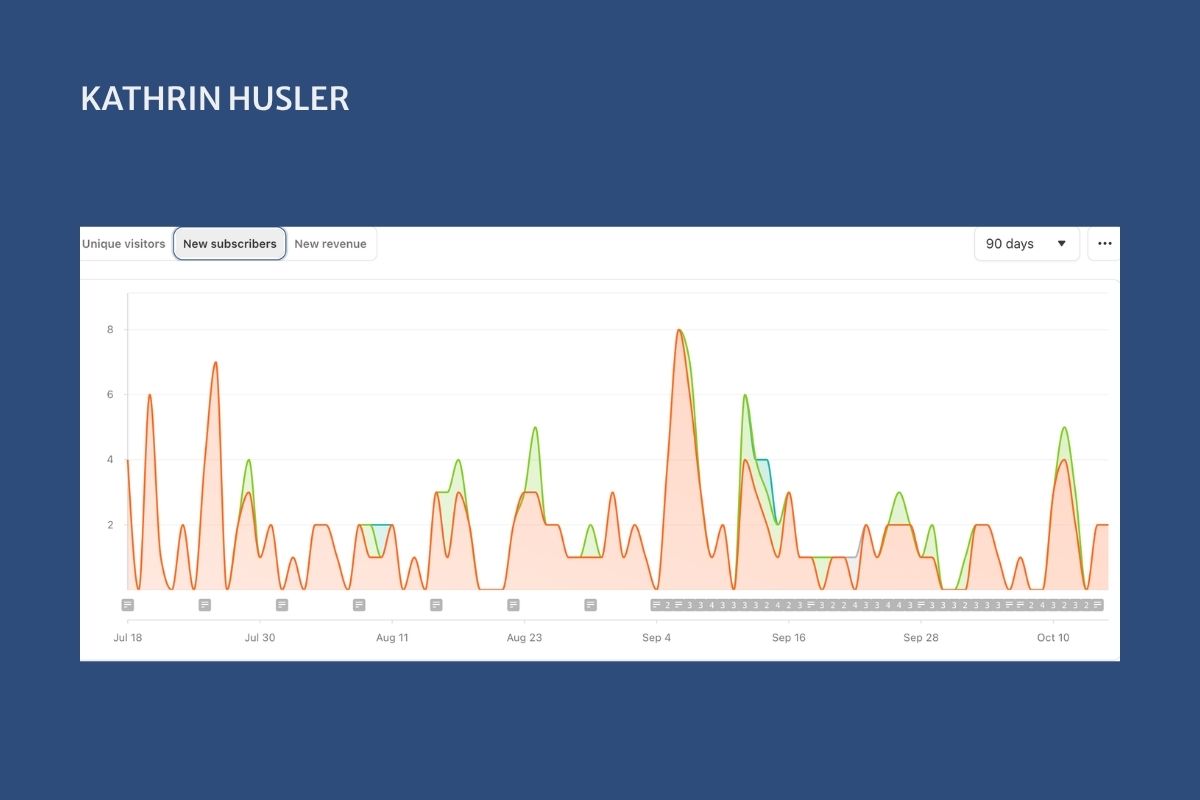
    Graph line showing new subscribers on branded blue background

    Things take time when you first start a business. Most people don’t buy from companies they’ve just discovered.

    When you stay consistent, you build trust. When you show up in the same caring and predictable way, you build trust.

    People buy from companies and people they trust.

    Once people know you and remember you, they will knock on your door.

    Stay committed to your strategy and branding journey. Your hard work will pay off.

  • You will succeed: Don’t listen to the voices in your head

    You will succeed: Don’t listen to the voices in your head

    A coyote crossed my path. I was driving home late one night, and when I pulled into our neighbourhood, a coyote stepped into the street in front of me. I stopped the car. He was as large as a German Shepherd and elegant in his smooth gait. We locked eyes. He was astonishing. It was a spiritual encounter that took me out of my autopilot and reminded me that I was part of the natural world.

    Then my life started to unravel. My wife and I were hoping to adopt a teenager, but after some confusing months the young man decided adoption wasn’t the right direction for him. The experience brought up my own struggles that I had gone through as a teenager. When the adoption didn’t move forward and I had more time on my hands again, I had to admit that my great job was turning into something unrecognizable that I hadn’t signed up for.

    Author standing proudly on top of a mountain that she climed, smiling down at the viewer, on branded pink background

    I did some research and found a wonderful therapist. I explored the past and the present and tried to check in more with my body instead of creating neat little narratives about my life in my mind. That’s when I realized something.

    Do you hear voices like that? They tend to be discouraging:

    • You can’t do this.
    • That’s not possible.
    • Who do you think you are?

    I understood that if I continued to listen to these voices, I was the only one holding myself back. So I made a plan on how to move forward in a direction that was aligned with where I wanted to go. And the voices had immediate commentary about this: none of it was reasonable and I should pivot immediately to something I disliked to ensure my own safety.

    If you want to succeed, come up with a plan and then stick to it. Monday, Wednesday, Friday or Tuesday, Thursday. Whatever works for you.

    The voices are like the ups and downs of life — they come and go in waves. Recognize them and know that they can’t derail you.

    You have a plan that you are going to hold on to on good days and on bad days. If you have to skip a day, that’s fine. You’re on the right track and nobody can convince you otherwise, not even these voices in your head.

  • Don’t Burn Yourself Out Creating a Brand Online

    Don’t Burn Yourself Out Creating a Brand Online

    Three months ago, I barely had an online presence. I created a LinkedIn post once in a while in support of the company I worked for. There was a letter to the editor published in a newspaper. A few pictures of me on a company Facebook page, from ten years back.

    Then I started to build a brand online. I decided to go big. I ramped up LinkedIn, added Substack, YouTube, Facebook, Instagram, and TikTok. The other day I was notified by a couple of platforms that I had published my 25th reel.

    Now I’m releasing four to five reels per week, I write a Saturday essay on Substack, I’m working on a website, and I’m posting on LinkedIn whenever I find the time.

    When you start building a brand, it’s a lot. You need a brand and business strategy, brand colours, a logo, and a sense of your audience. You have to learn how to wrestle with new platforms and software, and figure out what type of content creates traction for you.

    And once you get going, you realize that you’re on the wrong track. Everything needs to be revised, you don’t like your business idea or your brand colours, and the strategy feels off.

    If you work or have other commitments outside of brand building, it can feel like too much. Don’t give up. It doesn’t have to be this way.

    I’m not trying to tell you that building a brand isn’t a lot of work. But the way you approach it matters.

    It’s important to give yourself time to understand what you want. Once you start building, your dreams start to feel more real, and you get a better idea of what you really want. Don’t push on in a direction that isn’t aligned with who you are.

    Depending on your commitments outside of brand building, this first phase can take some time. Don’t stress about that. But do make sure that you’re taking a step forward every week: learn something new, do some research, figure something out.

    Toy airplane on a branded blue background

    And then one day you have a tagline that feels like you and that gives your business direction. Now it’s time to focus. Go over your content strategy again and make sure it’s up to date with your latest ideas. Develop two or three content buckets that are inclusive enough to avoid boredom and focused enough to attract your audience.

    At this point, you have a good sense of how much work it is to create content. Commit to something that makes sense for your schedule. Two essays, three posts and two reels. Or ten posts each week. It doesn’t matter. But it has to be aligned with your capacity. You don’t want to burn yourself out.

    Now take a look at your schedule. When can you write, when can you film, when can you edit? Decide on days and times, and try to stick to it. Break the work into chunks so it’s not overwhelming.

    This is the exciting part. Once you have a schedule that works, you’re starting to build a routine. And like with any job, a routine gets easier every week. At first, it took me a day to make a reel. The other day I managed to film eight in one day. What used to be hard becomes second nature.

    This doesn’t mean you become complacent. But your brain is not constantly occupied by what’s new and challenging, and instead you can experiment, try something new, and test your audience’s reaction.

    I’m nowhere near finished. My website only has a front page and I’m still pondering what products I’ll have on offer.

    Being finished isn’t the goal. The goal is to be on a runway where you can see straight ahead to the point of liftoff.

  • Stop Trying to Convince People to Choose You

    Stop Trying to Convince People to Choose You

    Building a brand is easy—just think ketchup.

    Ketchup is the last item on your grocery list.

    You went to the grocery store, very organized, with a list of things to buy on your phone to ensure you’re not getting swept away by the lovely music and the small font on the price tags. You don’t feel like spending money on groceries you don’t need.

    Now you stand in the ketchup aisle, and there are a lot of options. You don’t have much time—your partner needs the car in 20 minutes and you’re getting close to rush hour traffic.

    How do you pick your ketchup?

    1. Do you make a spreadsheet with price and weight, and pick the best option?
    2. Do you read the ingredients of the different brands and pick the one that you believe is the healthiest?
    3. Or do you just pick the brand that’s familiar, and maybe it’s on sale too?

    Most people will likely use a process similar to answer 3. Let me tell you why.

    The first two options are System 2 thinking. System 2 thinking is an effortful way of making decisions. Human beings prefer not to use it too much.

    System 2 thinking is mostly deliberate. It’s when you make a pros and cons list right before a large purchase, for example.

    Yellow, orange and green tomatoes on a branded blue background

    The third option is System 1 thinking. You use your intuition, habit, history, and experience with ketchup to make a decision that’s almost effortless. A lot of things go through your mind simultaneously, and nonetheless System 1 thinking comes easy. You snatch a ketchup bottle off the shelf and race to the checkout.

    You use System 1 thinking when you drive home from the grocery store, and you do all the right things and arrive unharmed. You can’t remember actively focusing on driving. But you do remember that you were thinking about an upcoming birthday party.

    So if you’re a ketchup brand, what do you need to do?

    • You need an exciting and fresh red colour and a white label that makes the red pop even more. You might use a picture of tomatoes to indicate to customers that your ketchup is made from real and juicy tomatoes.
    • You need consistency. You need to show up again and again in your customers’ lives, at birthday parties and on pasta cooked in a rush, and you need to be tasty every time and not let your customers down.
    • You need familiarity. People need to know your name and your font and the shape of your bottle. They need to recognize you immediately as that brand their grandmother proudly placed at the end of the table.
    • You need exposure. One day you’re on a billboard, another day you have a big display in the grocery store. People need to see you and be reminded again and again that you exist.
    • Oh and it’s good to make a splash—you need people’s attention.

    Many small businesses focus on providing great value and helping their customers make the right decisions. This is very powerful.

    But as a small business, it can be harder to be top of mind for your customers. After all, you don’t have the advertising budget of a major ketchup brand.

    When you build a brand online, keep System 1 thinking in mind. Repeat your colours and your style, and make yourself easily recognizable.

    When you show up with everybody else in people’s feed, you want your potential customers to linger on your post or essay because you’ve made a good impression over time.

    People don’t need to consciously remember you, but they need to recognize you. Can you make your brand stand out like a bottle of ketchup?


    Source:

    Binet, Les, and Sarah Carter (2018). How Not to Plan: 66 Ways to Screw It Up. APG.